
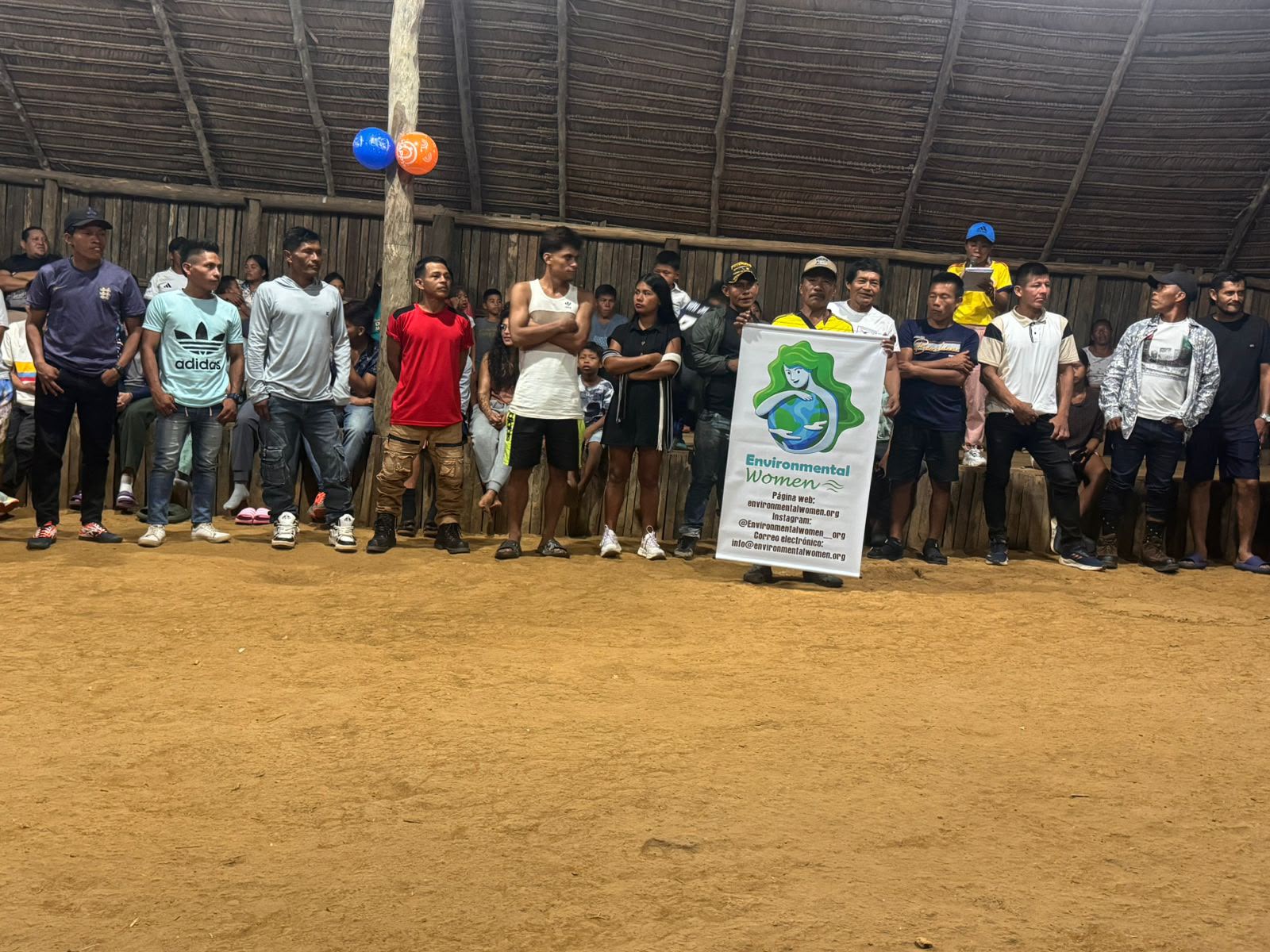
Environmental Women ORG issues this General Program for Climate-Smart Tikuna Agriculture as a sponsor-facing framework for strengthening Indigenous food systems in the Colombian Amazon basin. The beneficiaries are Tikuna families living in a 10,325-hectare humid tropical forest territory where agriculture is not only an economic activity, but also a foundation of food autonomy, territorial stewardship, and intergenerational knowledge. The program responds to a concrete failure point: climate behavior has changed faster than the local agricultural system has been able to adapt. Heavy rainfall, flooding, erosive runoff, and concentrated drought are now damaging staple crops and reducing the food available inside the reserve.
Our program is designed as a practical agricultural adaptation package under Tikuna techniques, uses, and customs, validated by Indigenous authorities and implemented through family plots, community governance, and women-led field learning. We do not frame the territory as a passive recipient of aid. Tikuna families already hold agricultural knowledge, ecological memory, and community rules for land use. The program adds climate-smart regenerative tools to that foundation: raised beds for flood tolerance, living barriers for erosion control, organic soil cover for moisture regulation, diversified agroforestry modules for production stability, and a native seed bank for continuity across seasons.
The operational target is 300 farming families, with one woman-led production unit per family. Each family receives a complete adaptation module rather than isolated inputs. The model includes three raised beds, two living barriers, organic cover, one family composter, diversified planting material, participation in field schools, and access to a community seed system. The program also creates a Tikuna Secretariat for Adaptive Agriculture to coordinate local monitoring, seed exchange, replication, and technical decisions with the Indigenous Council.
For sponsors, this is a high-clarity investment. The program converts funding into measurable physical units: 900 raised beds, 600 living barriers, 12,000 linear meters of soil protection, 300 composters, 300 diversified family modules, 20 conserved seed varieties, 12 farmer field schools, and at least 210 families applying three adaptive practices during the project period. The expected effect is a 25% reduction in crop loss within participating units, compared with the current community estimate of 66% annual losses.
The value of the program is its integrated architecture. Food access, land stewardship, Indigenous governance, women’s leadership, soil recovery, and climate adaptation are treated as one production system. This makes the intervention technically coherent, culturally appropriate, and suitable for replication in other Amazonian communities facing similar hydrological stress.
This document can be used as a general program umbrella or as the basis for individual grant proposals. Its strongest advantage is operational clarity. A sponsor can see the number of families, the number of field units, the agricultural practices, the governance mechanism, and the monitoring approach before funds are disbursed. The program is therefore not a general promise to support agriculture; it is a structured adaptation model for a defined Indigenous territory, with measurable units and a clear pathway from climate stress to field-level response.
The section will be operationalized through written field records, community validation, and sponsor-ready evidence. This ensures that the program remains understandable to external partners while staying anchored in local decision-making, practical agricultural work, and the concrete reduction of crop loss under climate stress, securely.
+ There are no comments
Add yours