
Colombian Amazon Basin | 2025-2035
By: Environmental Women ORG
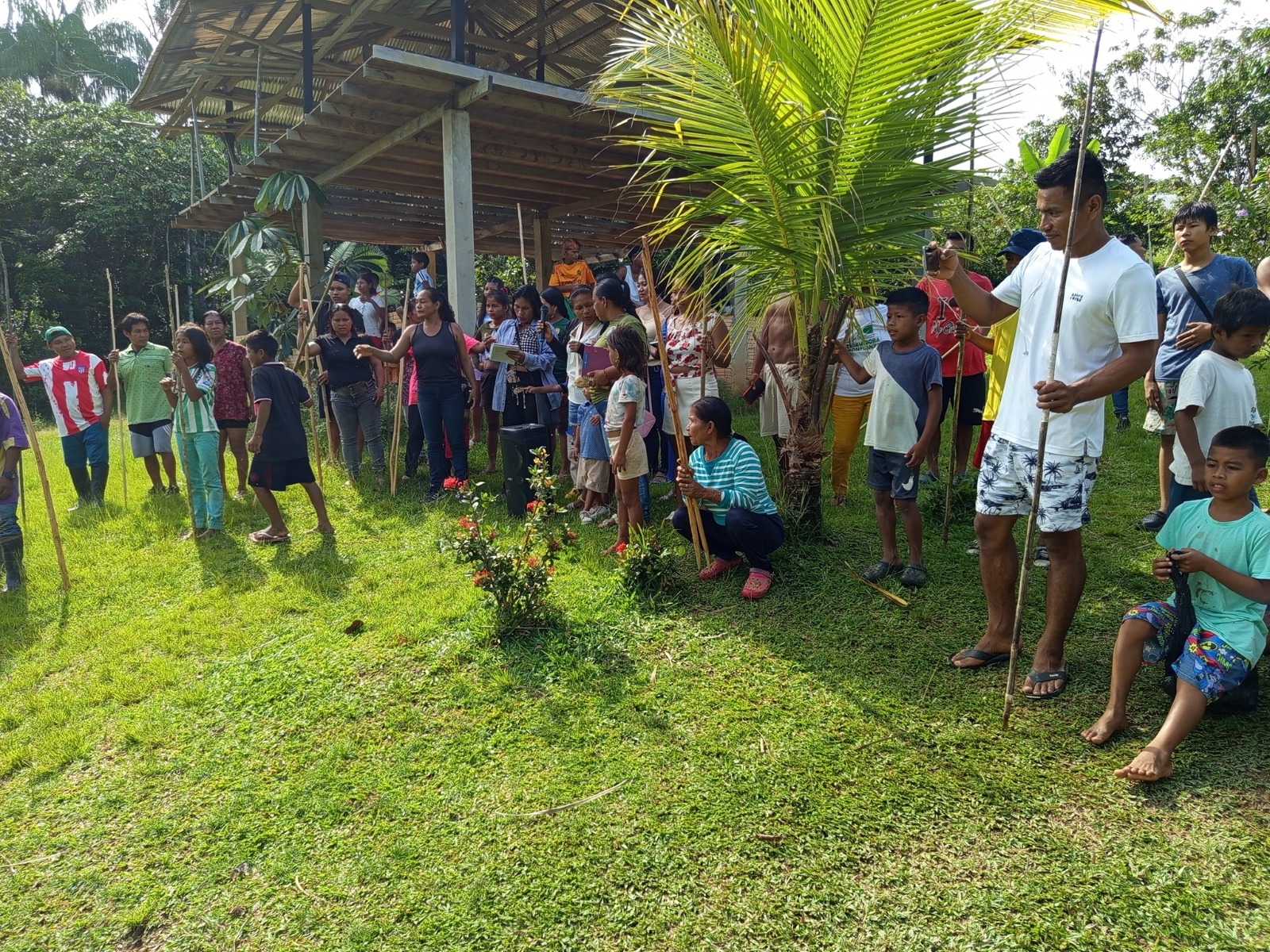
The 2025-2035 Conservation Plan for the Tikuna territory in Puerto Nariño, Colombian Amazon, is a ten-year biocultural roadmap designed by Environmental Women Org together with Tikuna families and local leaders to keep forest standing, restore degraded sites, reduce toxic contamination, and strengthen customary governance over 10537 hectares of Amazonian landscape. The planning area lies within a globally important conservation setting associated with the Key Biodiversity Area Parque Nacional Natural Amacayacu (CO150) and the Important Bird Area Parque Nacional Natural Amacayacu (CO083). This is therefore not a local environmental management note; it is a territorial defense instrument for an internationally significant forest mosaic where biological integrity, river dynamics, community food systems, and intergenerational knowledge are all under direct pressure.
The baseline diagnosis identifies three dominant and interacting drivers of forest degradation. First, illegal gold and silver extraction networks use backhoes, pumps, and mercury-based amalgamation to open pits, reroute waterways, and contaminate forest soils, wetlands, and riverine habitats. Community and organizational field evidence indicates at least 208 illegal mining points in the target landscape, the recruitment of more than 600 Tikuna laborers each year, forest clearing on the order of 16,000 hectares annually, and mercury residues in soils above 0.93 micrograms per gram, far above the 0.3 micrograms per gram critical threshold used as an international risk reference. Second, illegal timber trafficking targets high-value species such as rosewood (Aniba rosaeodora), cedar (Cedrela odorata), mahogany (Swietenia macrophylla), and sapan (Clathrotropis brunnea). Around 90 trafficking sources have been identified in 4,200 hectares, with approximately 308 trees cut per month and hidden in forest islands before moving into illegal trade chains. Third, the use of fire to convert forest to cattle or short-cycle agriculture removes an estimated 32 hectares per month and accelerates a cycle of soil exhaustion, repeated clearing, and renewed dependence on forest destruction.
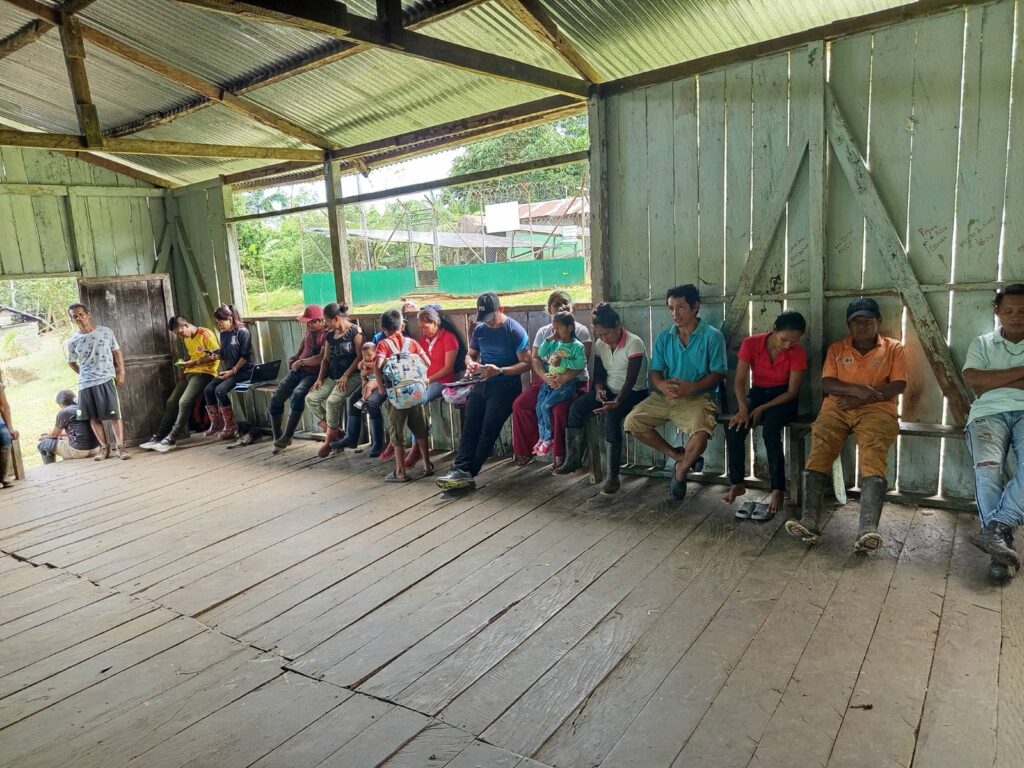
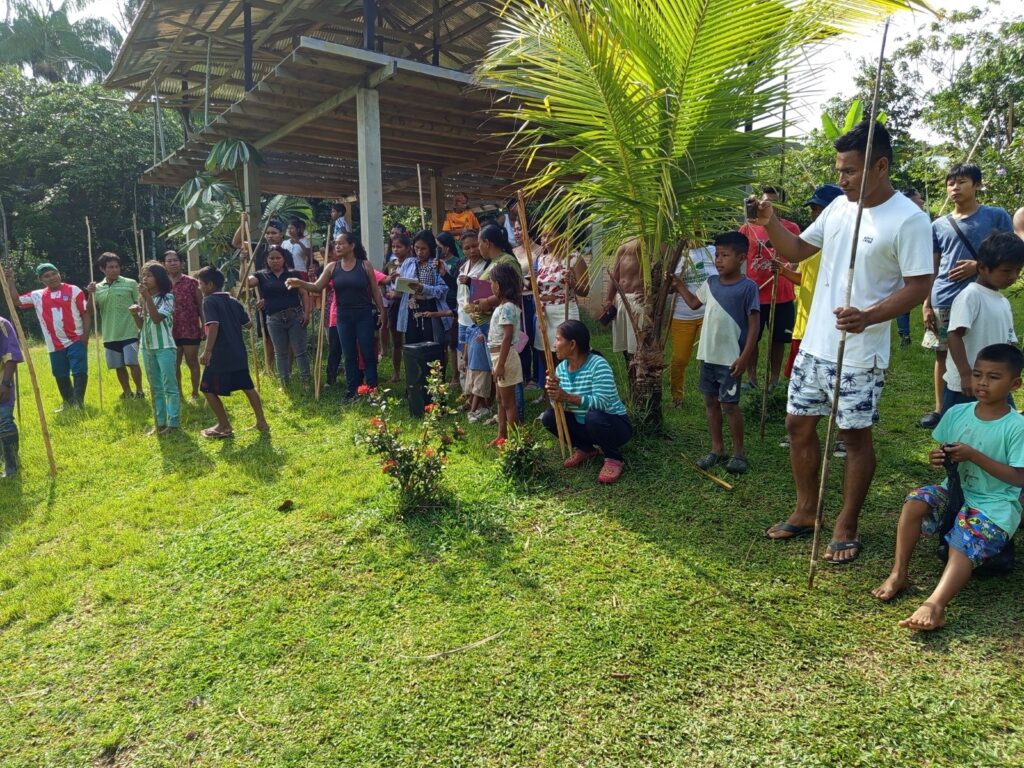
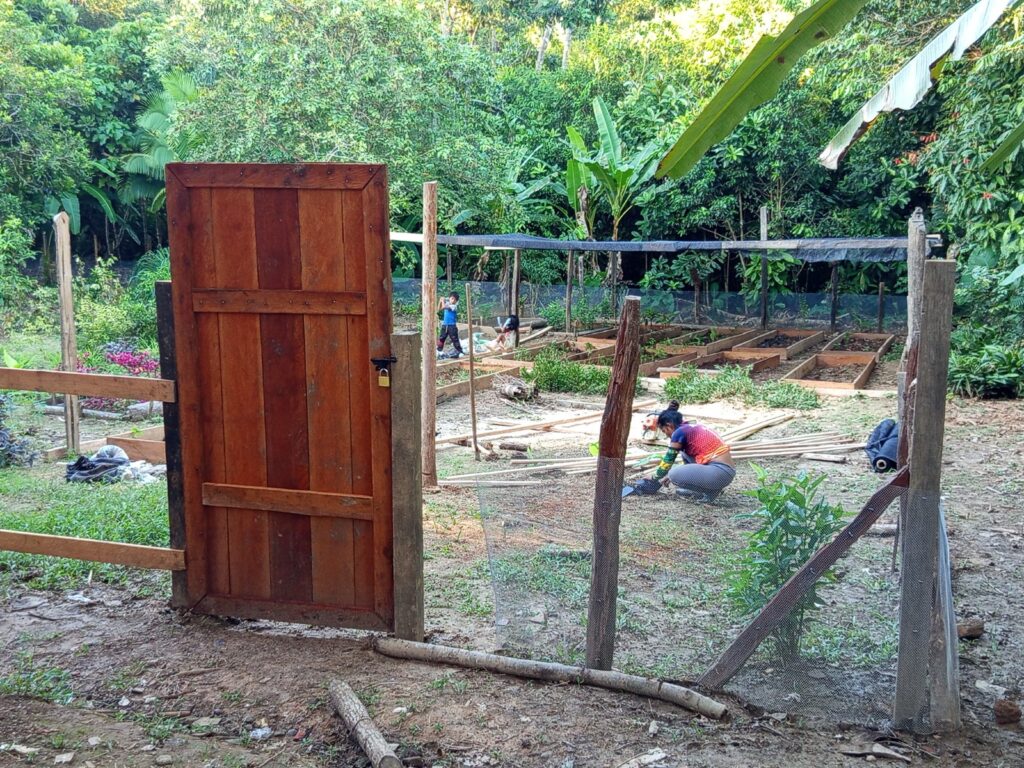
The plan responds to that triple pressure through a single strategic premise: forest conservation will only become durable if Tikuna customary authority, family labor, and youth leadership are redirected away from extractive criminal economies and into a standing-forest economy that the community can govern itself. For that reason, the plan combines four mutually reinforcing pillars. The first is a technical conservation strategy: community natural areas, river and wetland surveillance, anti-mining and anti-logging ranger brigades, restoration and phytoremediation, native-species nurseries, and community monitoring of mercury, forest cover, and illegal access routes. The second is an education strategy rooted in Tikuna territorial pedagogy, school and community learning, women’s knowledge, and youth stewardship. The third is a communication strategy using community assemblies, river-based outreach, visual materials, school mobilization, and bilingual content where possible, so that forest protection becomes publicly visible and socially legitimate. The fourth is a sustainability strategy that links conservation with legal livelihoods: restoration employment, nursery production, fire-free agroforestry, non-timber products, community ecotourism, and local monitoring services.
By 2035, the plan seeks measurable transformations: full community conservation management over 10537 hectares; a permanent network of Tikuna ranger brigades; recovery of degraded mining and burn sites through restoration and phytoremediation; a documented reduction in illegal timber extraction and forest conversion pressure; strengthened local governance over access, use, and surveillance; and a new generation of young Tikuna conservation leaders capable of defending the territory with scientific, legal, and cultural tools. This plan is therefore both a conservation instrument and a governance instrument. It protects forest structure, but it also protects the social arrangements that make long-term conservation possible.
+ There are no comments
Add yours