
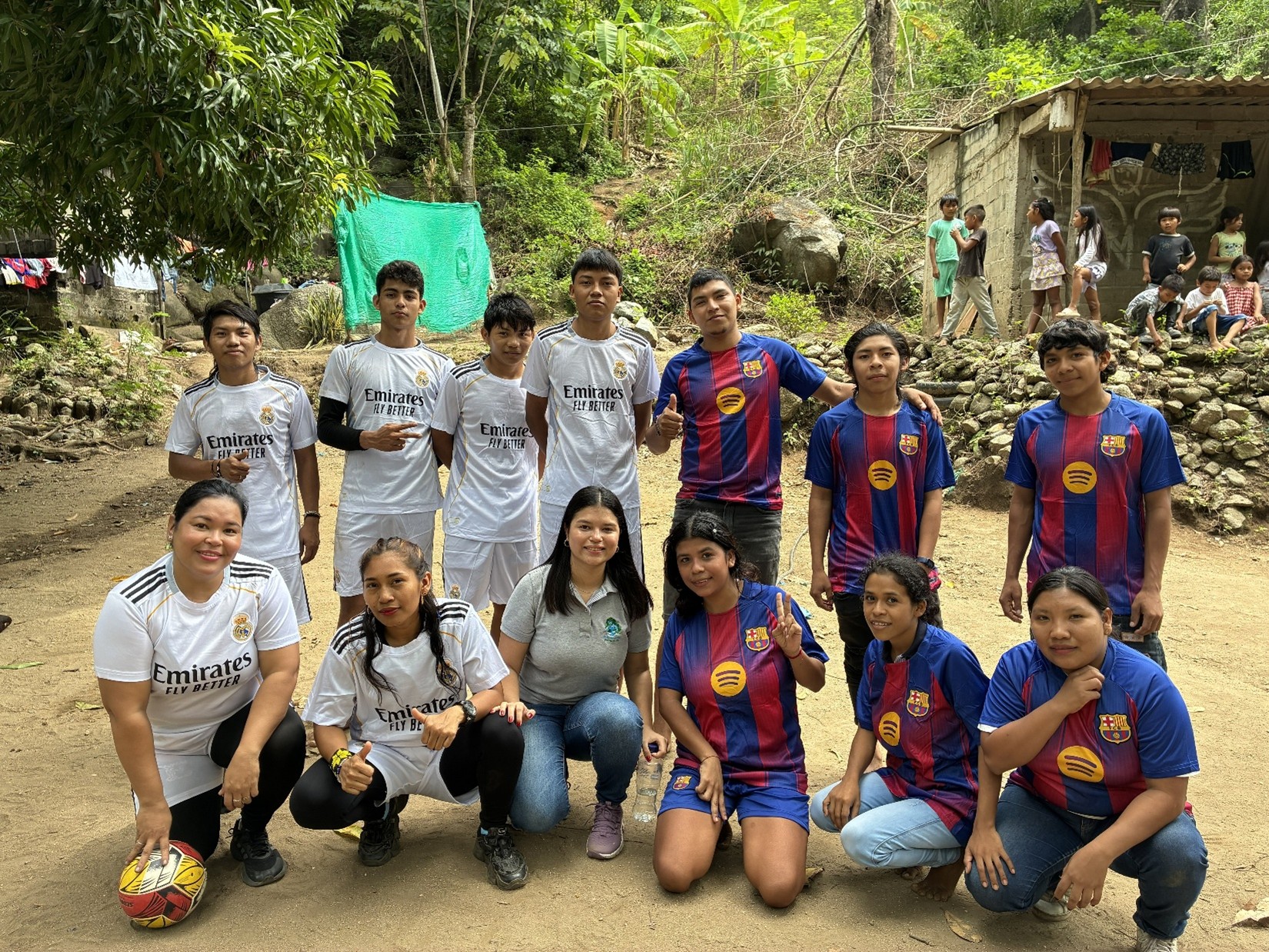
Selected from 495 international applications, our “Football Guardians of the Amazon” project will engage 600 Indigenous Tikuna youth in organised sport, using artificial intelligence to prevent dropout and reduce their exposure to wildlife trafficking networks.
November 9, 2026 | Environmental Women ORG | Colombia
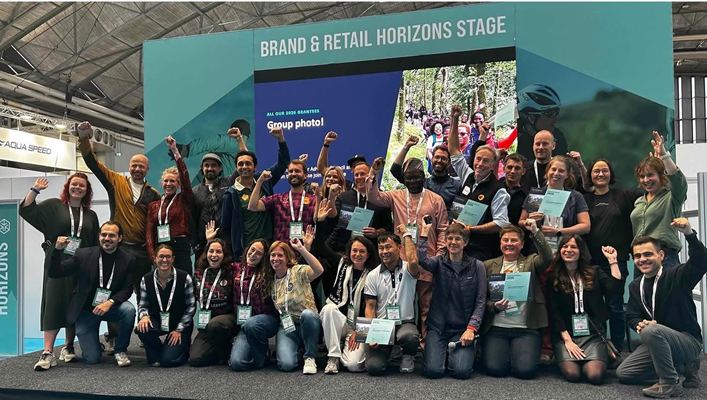
Environmental Women ORG (EWO) has been named one of four recipients of the prestigious Impact Grant 2026 from the ISPO Impact Foundation. Announced on November 4 at ISPO in Amsterdam, the award recognises our project, Football Guardians of the Amazon, which combines community football with Indigenous leadership and artificial intelligence to protect young people vulnerable to recruitment by illegal wildlife trafficking networks.
The Foundation selected 37 projects from 495 applications across 75 countries. Only four received recognition in its highest funding category, Impact Grant, offering up to €100,000. EWO joins organisations from Indonesia, Spain and Canada in this inaugural group of major grant recipients.
Why football matters in the Amazon
In Puerto Nariño, within Colombia’s Amazonas Department, Indigenous Tikuna communities face growing pressure from illegal wildlife trafficking. Criminal networks exploit young people’s knowledge of forest routes and wildlife habitats, recruiting them to capture or transport protected species.
Our territorial assessment identifies a 45% increase in wildlife trafficking activities over three years, with more than 1,200 animals affected by illegal operations. Limited access to organised sport leaves many young people without regular recreational opportunities or structured community activities.
We developed Football Guardians of the Amazon with a practical objective: give young people a dependable reason to remain engaged in community life while redirecting their territorial knowledge towards biodiversity protection.
600 Indigenous youth, one community-led football programme
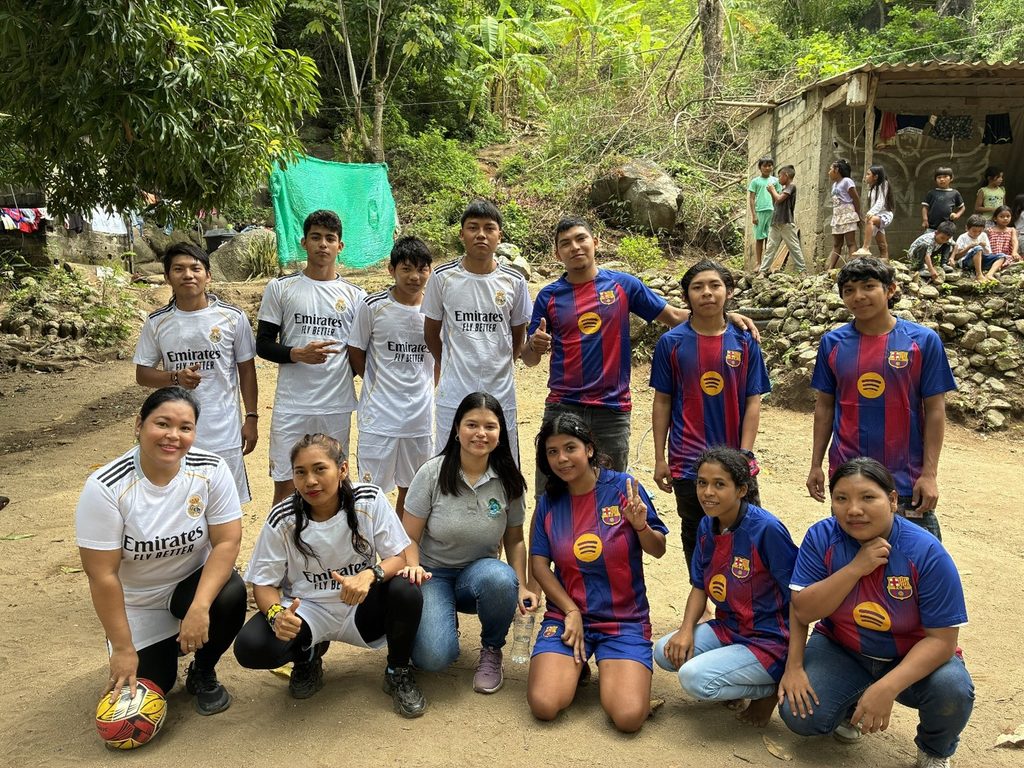
Over 24 months, we will expand our existing football initiative from 100 to 600 Tikuna participants aged 18–35, including 340 women. Activities will take place across a 14,400-hectare Indigenous territory surrounding Puerto Nariño.
We will establish 30 community football groups, providing two outdoor training sessions weekly. Local coaches will organise age-appropriate activities and monitor attendance. Regular participation will develop physical fitness while creating a predictable alternative to the economic and social pressures associated with poaching networks.
Our target is to retain at least 540 participants, representing 90% of those enrolled, throughout implementation.
Nutritional support will accompany the sporting programme. We will provide weekly food assistance adapted to local availability, helping participants maintain the energy required for training. Initial physical and nutritional assessments will guide individual support.
Artificial intelligence to prevent young people from dropping out
One distinctive component is our community-managed early-warning system, developed with the University of Magdalena.
We will register attendance, consecutive absences and participation patterns for all 600 young people. Artificial intelligence will help identify those at risk of abandoning the programme before disengagement becomes permanent.
When an alert appears, trained community monitors can contact families, identify attendance barriers and arrange appropriate support. This creates a measurable mechanism for responding to dropout risks while participation can still be restored.
The Tikuna Indigenous Council will oversee data governance, ensuring that sensitive information remains protected and that decisions respect community authority.
Our approach links technology directly to a practical intervention: keeping Indigenous youth connected to sport and reducing their vulnerability to recruitment into wildlife trafficking.
Indigenous women leading the next generation
Long-term continuity depends on community ownership.
We will train 100 Tikuna sports monitors and biodiversity guardians, including at least 60 women. Their preparation will combine practical coaching with leadership development and safeguarding procedures. Environmental education will focus on preventing poaching and protecting Amazonian wildlife.
A Tikuna Environmental and Sports Secretariat will coordinate training schedules and participation monitoring under Indigenous governance. Its responsibilities will extend beyond the grant period, allowing community leaders to maintain the programme locally.
We will also organise a mixed community football tournament involving 30 teams. Through these matches, young participants will connect sporting achievement with their responsibility to protect the forest.
Building a model that other Indigenous communities can adopt
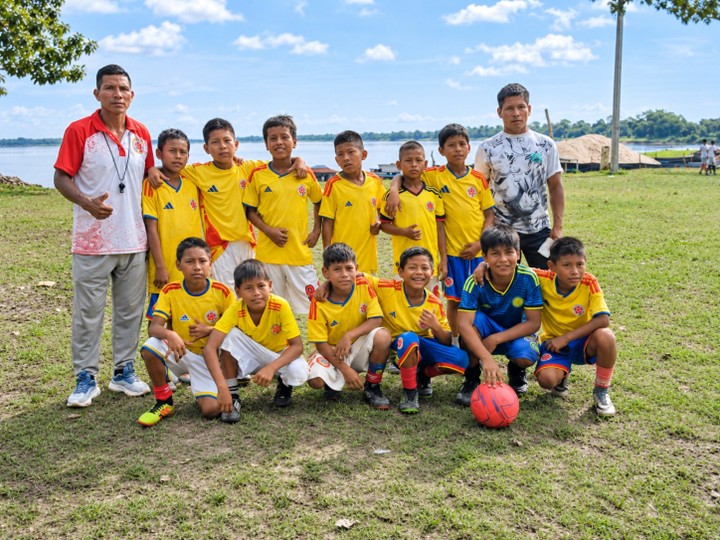
Our collaboration with the Tikuna Indigenous Council provides territorial legitimacy and local coordination. The University of Magdalena will lead technical support for monitoring and evaluation, measuring changes in sporting participation and youth engagement.
We will document the programme’s operating methods, retention results and community responses to dropout alerts. These findings will inform a practical replication guide and a policy brief for organisations working with Indigenous youth.
During implementation, we intend to share the model with six Indigenous communities or reserves, including partners in the Amazonian tri-border region connecting Colombia, Peru and Brazil.
The project is scheduled to begin on January 20, 2027, and continue until January 19, 2029.
An international recognition with local responsibilities
The ISPO Impact Foundation supports projects that expand participation in outdoor sport, remove barriers to inclusion and connect communities with nature. Our selection places Indigenous-led football and biodiversity conservation within that international mission.
We are grateful to the Foundation, its trustees and advisory council for recognising the potential of our work. We particularly thank Tanya Kenrick, General Manager, for her support throughout the announcement process.
For our team and Tikuna partners, this award brings a clear responsibility: translate international recognition into sustained sporting opportunities, measurable youth retention and stronger community protection of Amazonian wildlife.
Our commitment is to demonstrate how a replicable Indigenous football-and-AI model can keep 600 Tikuna young people active, connected to their communities and away from wildlife trafficking networks.
Watch our project presentation
Discover how we plan to bring organised football, Indigenous leadership and early-warning technology together in the Colombian Amazon.
Learn more: ISPO Impact Foundation — 2026 Grant RecipientsEnvironmental Women ORG | Santa Marta, Colombia | www.environmentalwomen.org
+ There are no comments
Add yours